From Taylor's time studies to software agents that act inside an ERP: how a century of management thinking shapes the way companies can put AI to work on decisions and strategy.
For more than a century, management schools have tried to answer one question: how should a company be organized and run so that its resources and activities produce the results it wants? Scientific management went after labor productivity. Administrative theory set principles of organization and leadership. Bureaucratic theory formalized responsibility and authority. The human relations movement brought in motivation and behavior, and systems thinking showed the enterprise as a network of interdependent processes. Strategic management then asked a harder question: where should the organization be heading, and how does it build a position it can hold?
Enterprise information systems grew up alongside these ideas. First they digitized transactions. Then ERP and similar platforms integrated processes, and later came Business Intelligence (BI), predictive analytics and performance frameworks such as the Balanced Scorecard (BSC). AI opens a new stage: agents that can interpret objectives, retrieve information, use applications, coordinate activities and execute actions. That makes it possible to tie strategy, information systems and day-to-day execution much closer together.
The real shift is not that companies use AI. It is what happens to our idea of the enterprise when part of its analysis, coordination and execution is done by software. And the shift is uneven: Stanford's 2026 AI Index reports that 88% of organizations in its 2025 data were using AI, while agent deployment stayed in the single digits in nearly every business function it analyzed. Using AI and being organized around agents are two very different things.
1. Scientific Management: Organizing Work to Increase Productivity
Frederick Winslow Taylor
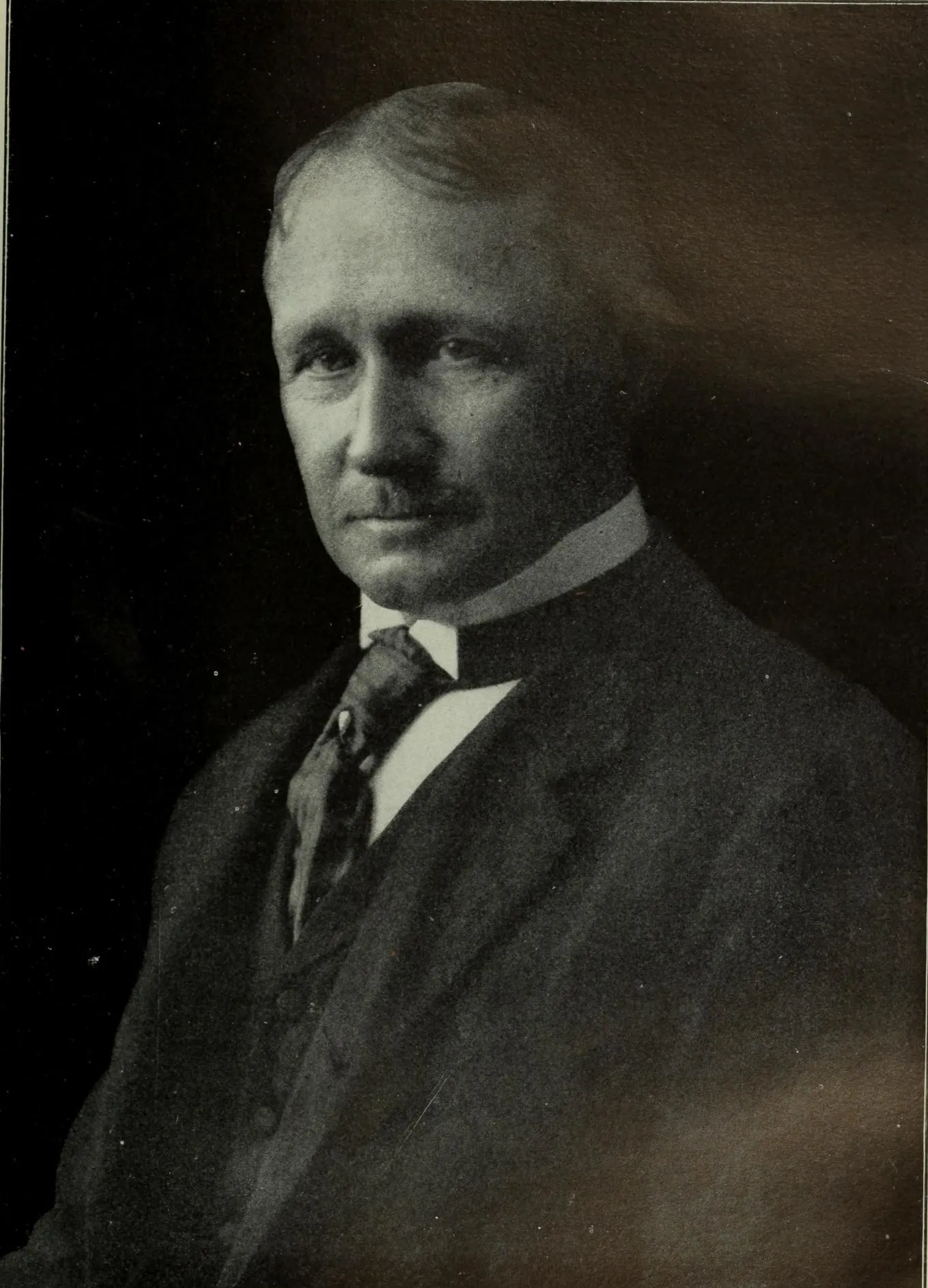
Photo: Rumely Company, Public domain, via Wikimedia Commons
1856–1915 · Scientific Management
Taylor proposed studying productive work systematically: observe the activity, find the best method, set a standard and measure the result. His ideas grew out of factories where output depended on human labor, machinery and the organization of production. That approach is still built into enterprise software. An ERP defines how transactions are recorded. A warehouse management system organizes how materials are received and distributed. A field service platform coordinates technicians, resources and work orders. Digitalization carried Taylor's principles from the shop floor into almost every administrative function.
What Changes with AI?
Traditional automation runs predefined procedures. AI can also handle work that requires interpreting language, documents, images or situations that are partly ambiguous. Take a work order that arrives by email. A traditional system records the message and assigns it to someone. An agent could read the request, identify the customer, pull up the relevant history, classify the job and prepare what is needed to process it.
Human and automated work no longer have to live in separate compartments. The management question moves from "how do we do this task faster?" to "how do we design a process in which people, applications and agents work together?" Taylor's core principle still holds: understand the work in order to improve it. What changes is the unit of analysis. It is no longer the individual worker but the business process and its outcomes.
2. Henri Fayol: From Managing Functions to Coordinating Capabilities
Henri Fayol
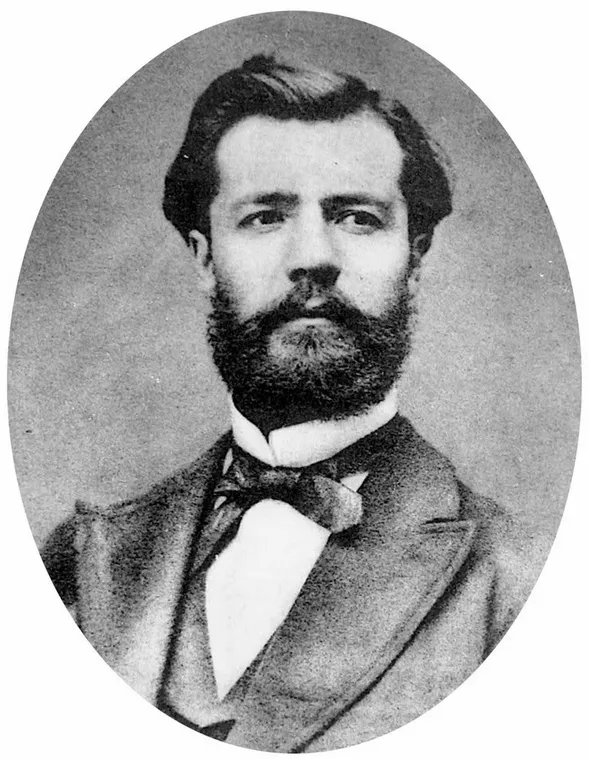
Photo: Unknown author, Public domain, via Wikimedia Commons
1841–1925 · Classical Administrative Theory
Fayol looked at the organization as a whole and developed principles on division of work, authority, responsibility and coordination. Where Taylor focused on production, Fayol studied the functions needed to run a complex organization: planning, organizing, directing, coordinating and controlling. ERP systems inherited much of this functional view. Accounting handles financial information, Sales handles customer relationships, HR manages people, Purchasing handles procurement and Operations runs production. Integration let these functions share information through common systems. But sharing a database is not the same as coordinating decisions.
Coordination Through Intelligent Agents
A sales agent could spot an opportunity and check material availability. A purchasing agent could request quotes and verify supplier terms. A finance agent could check the budget. These agents can work together around a process without copying the company's departmental structure, so coordination no longer has to rest only on functions and hierarchy.
Administrative authority does not go away. Every agent needs defined objectives, a human owner, limited permissions and explicit conditions under which it must ask for approval or stop. Fayol's unity of command takes on a new meaning: delegating work to technology must never blur who has authority and who answers for the results.
3. Max Weber: Bureaucracy, Rules, and Agent Governance
Max Weber

Photo: Ernst Gottmann, Public domain, via Wikimedia Commons
1864–1920 · Bureaucratic Management
Weber studied organizations built on rational-legal authority, formally defined responsibilities, specialization and impersonal procedures. Bureaucracy is usually associated with delays and red tape, yet formalizing roles was a major step forward in running increasingly complex enterprises. Enterprise systems absorbed this logic through access rights, procedures, approval workflows, segregation of duties and audit trails.
AI adds a new problem: an agent may have the technical ability to do something without the organizational authority to do it. An agent might be able to open the accounting system and prepare a bank transfer; that does not mean it should be allowed to approve it. In February 2026, the U.S. National Institute of Standards and Technology (NIST) published a concept paper on the identity and authorization of software and AI agents. It points to the need for controls over access to data, tools and applications, along with audit mechanisms and protection against attacks such as prompt injection.
An agent may have the technical ability to do something without the organizational authority to do it.
Bureaucracy, understood as formal responsibilities and controls, does not disappear with AI. It becomes a governance layer that controls actions taken by people and by intelligent systems alike.
4. The Human Relations Movement: People and Agents Within the Same Organization
Elton Mayo

Photo: Unknown author, Public domain, via Wikimedia Commons
1880–1949 · Hawthorne Studies
Mayo's name is tied to the Hawthorne studies at Western Electric's plant near Chicago in the late 1920s and early 1930s, which showed that attention, group norms and relationships at work affect output. The human relations movement that grew from that work widened the mechanistic view of work by adding motivation, social relationships and behavior. Productivity does not depend only on procedures, materials and pay. Culture, training and people's ability to take part in the process matter too.
AI makes this point sharper. A company can automate tasks and still fail to change if its employees do not understand the new tools, distrust their output or lack the skills to supervise them. Agents change job content: preparing information, drafting documents and routine coordination may be automated more and more, while supervision, exception handling, negotiation, creativity and professional judgment become more important. That means redesigning roles, building skills and giving employees a real say. An intelligent enterprise is not one that swaps human work for automation; it is one that combines human and technical capabilities around shared objectives.
Abraham Maslow

Photo: William Carter, Public domain, via Wikimedia Commons
1908–1970 · Hierarchy of Needs
In "A Theory of Human Motivation," published in Psychological Review in 1943, Maslow argued that people act to satisfy needs arranged in levels: physiological needs, safety, belonging, esteem and self-actualization. Once a level is reasonably covered, the next one starts to drive behavior. Later research questioned how rigid that order is, but the core idea stuck in management: a paycheck and a stable job are not enough for people to do their best work. They also need to belong, to be recognized and to grow.
Agents bring this back to the center. When software takes over part of someone's routine work, the first need to feel the shock is security: "Will my job still exist?" If management ignores that question, adoption stalls, no matter how good the tools are. The answer is not a speech. It is to show what the new role looks like, train people for it and recognize the judgment, supervision and customer work that only they can do. Done that way, automation can free time for the higher needs Maslow described instead of threatening the basic ones.
5. Systems Theory: The Enterprise as a Network of Interdependent Processes
Systems thinking matters a great deal for enterprise information systems. A company is not a collection of departments but an open system that exchanges information and resources with customers, suppliers, employees, institutions and others. One sale can create needs in inventory, production, staffing, financing and logistics. One late purchase can hit operations, customer commitments and financial results. ERP emerged as the technical answer to this need for integration. Integrated data, however, does not guarantee that a company will read the relationships between its processes in time.
AI as a Capability for Systemic Coordination
An agent can detect a delay, check alternative stock, identify affected orders, prepare scenarios and ask the right managers for a decision. Information stops being only a record of what happened and becomes an operational resource that triggers analysis and action. The company can become more adaptable, provided its intelligent systems work on reliable data and within governed procedures. This is where systems thinking meets business intelligence and strategic management.
6. Strategic Management: From Operating Efficiently to Shaping the Future of the Enterprise
The classical schools set out principles for organizing and improving operations. Yet a company can run its processes efficiently and still fail: it sells products the market no longer wants, serves unprofitable segments or never builds the capabilities to respond to change. Strategic management adds that missing dimension. Doing things right is not enough; the company has to decide what to do, which objectives to pursue, where to compete, how to create value and which capabilities to build. Vision sets a long-term direction, strategy sets the choices and priorities, and strategic planning turns them into objectives, initiatives, resources and commitments. None of this ends with a plan. It needs execution, attention to results, learning and regular review of decisions.
AI Brings Intelligence into Strategy Formulation
Strategic planning has traditionally relied on market research, financial data, projections and analyses prepared by specialists. Agents can extend that work. A market intelligence agent could gather information on competitors, analyze trends and flag signals of change. A finance agent could build growth scenarios and test liquidity constraints. An operations agent could estimate what happens if demand rises without a matching increase in resources. In July 2026, Boston Consulting Group examined decision agents in corporate management, describing agents that collect information across functions, find data gaps and evaluate scenarios to support strategic decisions.
Compared with a traditional planning system, the gain is speed: AI can shorten the time it takes to prepare alternatives, test assumptions and update scenarios. It should not take over management's accountability for strategic decisions. Choosing a competitive position, accepting a risk or committing capital calls for human judgment and someone who answers for it. AI widens the intelligence available to build a strategy; it cannot decide what the organization is ultimately for.
7. Business Intelligence: From Understanding the Past to Understanding the Business
Business Intelligence was a major step for enterprise information systems. ERP and other operational platforms record and process transactions; BI turns those records into information that helps management understand performance. Through integration, transformation and modeling, data from different sources becomes indicators, reports and analysis. A sales director can look at revenue by region, product or customer. An operations manager can check lead times, productivity and resource use. A CFO can analyze profitability, cash flow and budget variances. BI gives a coherent view of what is happening across the organization. But a dashboard does not decide anything. Management still has to interpret the indicators, look for causes, weigh alternatives and choose what to do.
How AI Changes BI
Generative AI lets users query analytical systems in natural language. A manager might ask: "What explains the drop in margins last quarter?" An assistant connected to a semantic model can retrieve the relevant measures and help present the answer. In June 2026, Microsoft documented these capabilities for Copilot in Power BI and warned that preparing the data, the semantic models and the users is essential to avoid wrong or misleading answers.
Agents add one more step. Instead of waiting for someone to open a report, an agent could review selected indicators on a schedule, detect deviations, look into causes and prepare recommendations. Say BI shows that gross margin on a service line is falling. An analytical agent reviews costs, compares periods, finds a change in material prices and checks variations in execution times. It then writes a data-backed explanation and puts options in front of the responsible manager. BI stops being only something you consult and becomes part of a continuous cycle of observation, analysis and response.
The Problem of Data Meaning
An agent may calculate a figure correctly while using the wrong business definition. What exactly does profitability mean? Gross margin or net margin? Which costs should be included? What period is being measured? These questions require shared business definitions. A semantic layer establishes measures, relationships, and business rules that maintain a consistent interpretation of information. In January 2026, Tableau presented an initiative to unify the business logic used by BI and AI agents, addressing the problem of inconsistent definitions across analytical tools.
Artificial intelligence does not eliminate the need for a data architecture. It makes that architecture more important.
8. The Balanced Scorecard: Turning Strategy into a Management System
Robert S. Kaplan and David P. Norton
Balanced Scorecard · 1992
Kaplan and Norton introduced the Balanced Scorecard in 1992 to complement financial measures with indicators on customers, internal processes and organizational learning, and later developed it into a full strategic management system. It is one of the strongest links between strategy and enterprise information systems. Their point was simple: financial indicators alone cannot tell you how an organization is really performing.
Financial results show much of what has already happened, but the capabilities that sustain those results are built through customers, processes, people, technology and learning. The BSC organizes strategic objectives into four related perspectives:
- Financial: what financial outcomes must we achieve?
- Customer: what value must we deliver to our customers?
- Internal business processes: which processes must we excel at?
- Learning and growth: what capabilities must we develop?
The framework links organizational capabilities to processes, processes to customer value, and customer value to financial results. Those cause-and-effect links have to be stated and tested for each organization; the BSC does not imply that every company should use the same indicators or that results follow a single causal chain. Its value lies in turning each organization's own strategy into related objectives, measures and concrete initiatives.
The BSC Is Not Simply a Dashboard
A dashboard collects and presents information. The BSC sets which strategic objectives must be reached, how they relate and which indicators will measure progress. Three questions show the difference:
- Strategy: what do we want to achieve, and why?
- BSC: which objectives and outcomes must we measure to know we are moving in the right direction?
- BI: what information do we need to calculate, explain and analyze those outcomes?
BI and the BSC complement each other but are not the same thing. A company can have excellent dashboards and no coherent strategy. It can also have a well-built BSC and fail to use it because it lacks reliable data to calculate the indicators. Putting both together connects strategic intent with operating reality.
9. The Balanced Scorecard When Agents Join the Team
With agents, the BSC can go beyond monitoring performance and help coordinate action. Picture a service company whose strategy is to raise profitability through leaner operations and a better customer experience.
The change that matters is not that agents calculate indicators; traditional systems already automate much of that. It appears when agents take part in variance analysis, preparing alternatives and coordinating actions. A drop in gross margin, for instance, could trigger an analysis of labor hours, material variances, scope changes and commercial terms. An agent gathers the evidence and lays out possible causes. The responsible manager reviews the findings and decides whether to change a procedure, renegotiate terms or revise estimating criteria. Once the initiative is approved, other agents can help carry it out and track it. The objectives and indicators in this example are illustrative design examples, not actual results from InnovanSIS or any client.
An AI-Assisted Strategic Management Cycle
- Vision and strategy: management sets purpose, priorities and strategic choices.
- Objectives and indicators: the BSC turns strategy into objectives, targets and measures.
- Information and analysis: enterprise systems and BI provide evidence on performance.
- Interpretation and recommendations: agents spot deviations, investigate causes and prepare alternatives.
- Decision and execution: responsible managers approve initiatives, and systems act within defined limits.
- Evaluation and learning: the organization compares outcomes with objectives and adjusts processes or strategy.
This cycle is a proposed management architecture, not a feature every AI platform provides out of the box. It needs consistent data, business rules, integrations, permissions and evaluation mechanisms. Strategic indicators must also never become orders to optimize blindly. If an agent's only objective is to cut response time, it may suggest actions that hurt service quality. That is why the balanced nature of the BSC matters: it lets management look at financial results, customer satisfaction, process performance and capability development together.
10. From Enterprise Systems to the Architecture of the Intelligent Enterprise
All of this invites a fresh look at enterprise architecture. For years the focus was on digitizing departments and connecting them. The next stage is to tie intelligence and action to the mechanisms of strategic management. We see this architecture as six related components:
- Strategic Management: Vision · Strategy · Objectives · BSC · Priorities
- Business Intelligence: BI · KPIs · Semantic Models · Forecasting · Scenario Analysis
- Systems of Action and Intelligent Agents: Analytical Agents · Operational Agents · Workflows · Orchestration
- Enterprise Systems of Record: ERP · CRM · HCM · SCM · Operational Applications
- Data, Knowledge, and Integration: Databases · APIs · Documents · Semantic Models · Events
- Governance, Identity, Security, and Human Oversight
This is a conceptual model proposed by InnovanSIS. The components interact in several directions; it is not a physical hierarchy or a fixed sequence. Strategic management defines the objectives. BI reports on performance. Agents interpret that information and coordinate processes. ERP and other enterprise systems hold the official records and transactions. The data and integration layer connects everything, and governance sets who may access, analyze, recommend, authorize and execute. Commercial platforms are starting to move this way: at Microsoft Build 2026, Microsoft described an architecture in which semantic models give intelligent systems enterprise context, while operational agents reason over current information and act within policies.
None of this means BI disappears or ERP gets replaced by agents. Their capabilities get folded into a broader enterprise system.
11. Grok Bot: A New Case of Agent-Based Organization
The development of Grok Bot provides a concrete example of this transformation. On September 3, 2026, SpaceXAI announced the enterprise availability of Grok Bot, a platform that allows organizations to create specialized agents capable of operating through individual cloud computers. According to the vendor's documentation, these agents can use applications and websites, execute tasks, collaborate with one another, and request human decisions when appropriate. The enterprise offering includes access, network, and auditing controls.
The novelty is not simply having a more advanced chatbot. It is that agents can maintain work activities beyond an individual conversation and interact with enterprise tools.
Grok Bot and Strategic Management
Imagine a company building a team of agents to support its strategic management process. A market intelligence agent collects signals about customers and competitors. Another retrieves financial information and prepares revenue and cost scenarios. A third analyzes operational indicators and identifies capacity constraints. A coordination agent consolidates the analyses and prepares a report for a management meeting. Finally, operational agents help execute approved initiatives. This is an illustrative scenario: it describes a possible enterprise architecture, not a verified Grok Bot implementation or a native BSC capability announced by its vendor. Its significance lies in demonstrating how persistent agent platforms could connect planning, analysis, and execution processes.
The Limits of Autonomy
An agent may recommend raising prices, modifying a commercial policy, or rescheduling an activity. But the ability to formulate a recommendation is not equivalent to the authority to execute it. Likewise, the fact that an agent can technically access an ERP does not mean it should receive broad administrative permissions. The enterprise must establish owners, limits, access controls, activity records, and authorization mechanisms. Agents can expand an organization's operational capacity, but they do not replace its accountability structure.
12. A New Conception of the Enterprise: An Organization Built Around Capabilities and Outcomes
A traditional company is usually drawn as an org chart of positions, departments and reporting lines. That picture is still needed to understand human authority and responsibility, but it cannot describe an organization where part of the work is done by applications, automations and agents. A company that works with agents also needs a capability map: which processes exist, what outcomes are expected, which systems take part and which agents may step in. Every agent needs a defined role, a human owner, a set of authorized tools and operating limits.
This may change how work is split across departments, but the deeper change is in the link between strategy and execution. Companies usually set objectives, turn them into plans and then coordinate execution through meetings, reports, instructions and controls. Agents can take on part of that coordination: preparing information, flagging deviations, following up on commitments and smoothing work across functions. Management keeps the job of setting priorities, weighing consequences and resolving conflicts between objectives. The result can be a more integrated management system, where operating results feed strategic decisions more often.
13. How to Begin Enterprise Transformation
Bringing in agents should not start with installing tools and then looking for uses. It should start with strategy and processes. A sensible roadmap has six stages:
- Define the vision and strategic objectives. Identify the outcomes the company wants and the capabilities it must build.
- Design or review the Balanced Scorecard. Turn objectives into indicators, targets, owners and initiatives. You do not need dozens of KPIs; keep the ones that really show strategic progress.
- Consolidate enterprise systems. Make sure the ERP, CRM and other applications hold reliable records and support clearly defined processes.
- Build BI capabilities. Create consistent data models and indicator definitions. Reports should help investigate why deviations happen, not only show totals.
- Introduce agents step by step. Start with analysis, information preparation and low-risk actions. Widen autonomy only when there is enough evidence of reliability and the right controls are in place.
- Evaluate and improve continuously. Measure the effect of automation on business results, costs, quality, customer experience and employee performance.
This is not a universal method. One company may already have a mature ERP and need a clearer strategy; another may have a clear strategy and unreliable data. The starting point should match each company's real situation.
14. The Future of Business Management
From Taylor to today's AI systems, each management paradigm has dealt with the same need: organize resources and coordinate work to reach objectives. Taylor studied work, Fayol organized the enterprise, Weber formalized authority, the human relations school brought in people, systems theory revealed interdependence and strategic management added the long view. ERP integrated processes, BI turned data into information and the Balanced Scorecard linked strategy to objectives, indicators and initiatives. AI now adds systems that can help interpret information, coordinate activities and carry out controlled actions.
Put together, these ideas point to an organization in which strategy sets the objectives, enterprise systems record operations, BI reports on performance, the BSC tracks strategic progress and agents help turn knowledge into action. That model does not remove the foundations of management. It demands better-defined processes, clear responsibilities, reliable data, coherent indicators and solid governance. The intelligent enterprise is not the one with the most agents. It is the one that best combines its human and technical capabilities to turn strategy into lasting results.
At InnovanSIS we see this as the next step for enterprise information systems: from platforms that record and process information to an architecture that connects strategy, intelligence, decisions and execution.
Key takeaways
- AI adoption is widespread, but organizations built around agents are still rare.
- Agents need owners, limits and audit trails: technical ability is not authority.
- Start with strategy, a focused Balanced Scorecard and reliable data, then add agents step by step.
References and Further Reading
Historical works are cited for their original contributions. The references concerning AI, BI, and intelligent agents correspond to publications from 2026.
Management and Strategic Performance
Kaplan, R. S., and Norton, D. P. (1992) The Balanced Scorecard—Measures That Drive Performance.
Kaplan, R. S., and Norton, D. P. (2007) Using the Balanced Scorecard as a Strategic Management System.
Balanced Scorecard Institute. The Four Perspectives of the Balanced Scorecard.
Enterprise AI, BI, and Intelligent Agents · 2026
Stanford Institute for Human-Centered AI. AI Index Report 2026 — Economy.
Boston Consulting Group. Decision Agents Bring AI into the Boardroom.
Microsoft. Use Copilot with Semantic Models in Power BI.
Microsoft. Building Agentic Apps with Microsoft Fabric and Databases.
Tableau. Unified Business Logic Foundation for AI and BI.
National Institute of Standards and Technology. Identity and Authority of Software Agents.
SpaceXAI. Grok Bot for Enterprise.